The best way to start a 12-week transformation is to define a clear emotional reason for your goal, choose a realistic starting point based on your current fitness level, establish non-negotiable weekly habits, and secure accountability through a coach or structured programme. Tracking progress beyond bodyweight — including strength, energy, and how clothes fit — keeps motivation high through the challenging middle weeks.
Key Takeaways
- Connect your goal to a deeper emotional reason — this sustains motivation when enthusiasm dips
- Start at a training frequency that matches your current fitness, not your peak from years ago
- Build non-negotiable habits early: fixed training days, meal prep time, and a consistent sleep schedule
- Accountability from a coach or community significantly improves completion rates
- Track strength, energy, measurements, and photos alongside bodyweight for a complete progress picture
You’ve made the decision, you’re ready to commit to a 12-week transformation. That’s huge. But before you dive into burpees, meal prepping for hours, or cutting carbs cold turkey, take a breath.
The first few steps you take will define how successful and sustainable your transformation actually is.
Key Takeaways:
- Start with clear, emotion-driven goals—not just weight loss numbers.
- Establish your non-negotiables: training days, meal prep habits, and sleep routines.
- Choose a realistic plan you can stick to based on your current fitness level and lifestyle.
- Accountability and support (from a coach or community) are essential to keep momentum.
Step 1: Get Clear on Your Why
You’ve probably heard this a hundred times before. But when it comes to a 12-week transformation, it’s not just about writing down “lose weight” or “get fit.” It’s about connecting to the deeper reason behind your goal.
Do you want to feel confident in your clothes again? Keep up with your kids? Prove to yourself that you can finish something?
Write it down. Say it out loud. Because when motivation dips (and it will), your “why” is what gets you through.
Step 2: Pick a Starting Point That Matches Reality
This one’s tough, especially if you’re comparing yourself to your “fittest self” from five years ago. But honesty here sets you up for long-term success.
If you’ve been inactive, jumping into 6 workouts a week will only lead to burnout or injury. Start with 3 solid sessions, master your movement patterns, and build up.
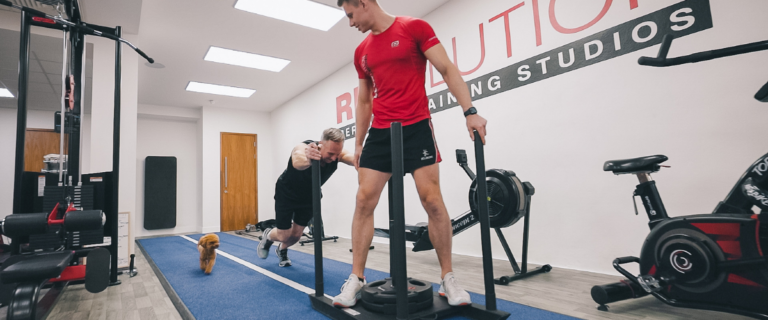
At Revolution PTS, every new client begins with a comprehensive assessment—mobility, strength, posture, goals—so the plan meets you where you are.
Step 3: Build in Non-Negotiables Early
There will be days when you don’t feel like training, cooking, or showing up. That’s normal. What saves you is having non-negotiables already built into your routine.
Think of them like anchors:
- Your training days are in your calendar—no compromises.
- Sunday is for meal prep—non-negotiable.
- You shut off screens by 10pm for sleep—done.
These micro-habits create momentum. And momentum is everything in week 3 when the novelty wears off.
Step 4: Don’t Go It Alone
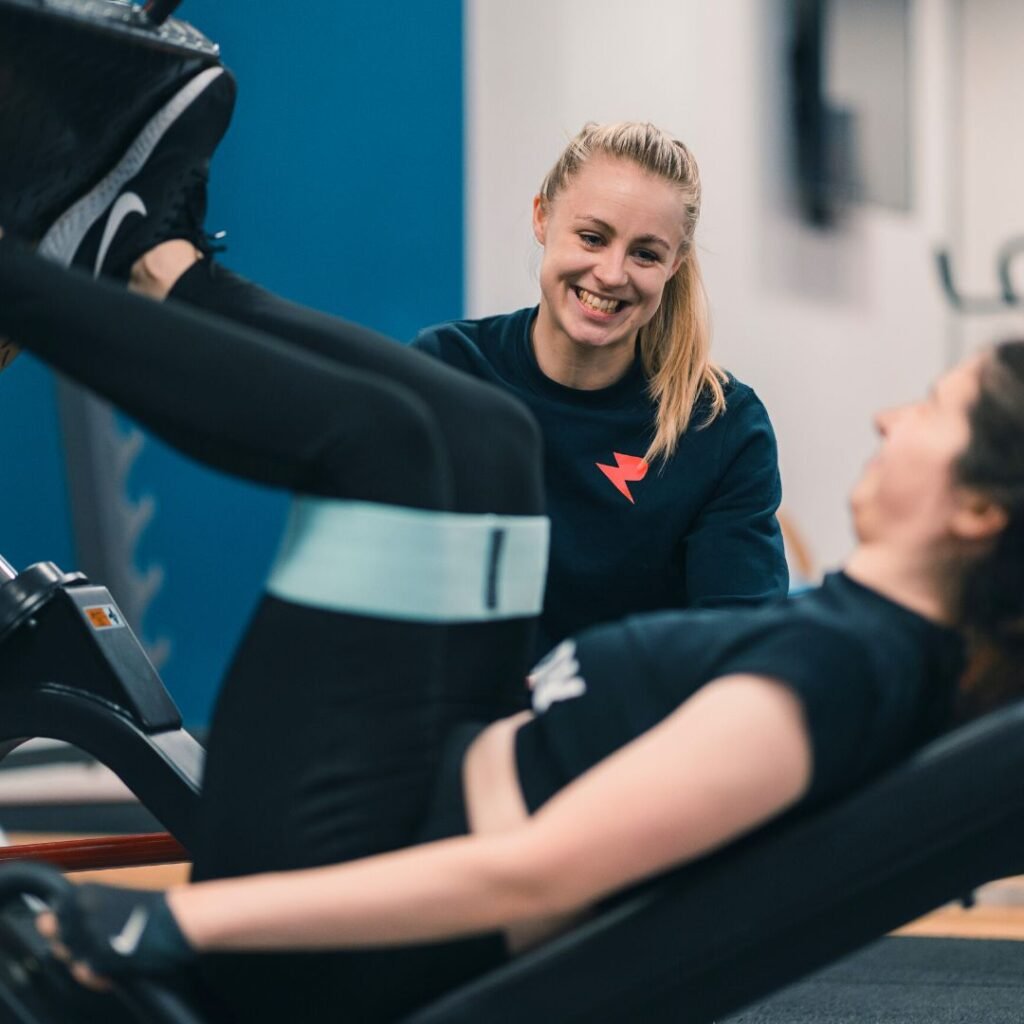
Having a coach or community keeps you focused when things get hard. Whether that’s in-person support at a local gym or remote check-ins with an online coach, accountability makes a massive difference.
The best part? You don’t have to think about what to do. Your plan, workouts, and nutrition are handled—you just show up and do the work.
If you’re local, Revolution PTS has personal trainers across London and Brighton who specialize in 12-week transformations for all levels. And if you’re remote? Their hybrid and online coaching plans give you structure and support wherever you train.
Step 5: Track More Than Just Your Weight
You’ll want to weigh yourself—it’s normal. But real progress shows up in many ways:
- Your clothes fit differently.
- You’re lifting heavier.
- You’re sleeping better.
- Your energy is more consistent.
- You feel proud of what you’re doing.
Track it all. Celebrate it all. The small wins are what build lasting change.
Final Thought: Momentum Is Greater Than Motivation
Starting a 12-week transformation isn’t about feeling fired up every day. It’s about building routines that keep going even when motivation takes a day off.
Pick a program that makes sense for your lifestyle. Get help from someone who’s walked the path before. And start with habits you can sustain—not punishments you’ll resent.
Ready to start your transformation the right way?
Check out the 12-Week Transformation Program at Revolution PTS and get expert coaching tailored to you, from day one.
Setting Goals That Actually Work
Vague goals like “get fit” or “lose weight” lack the specificity needed to drive consistent action. Research supports setting goals that are specific, measurable, and emotionally meaningful. Instead of “lose weight,” try “drop one dress size by week eight” or “deadlift my bodyweight by week twelve.”
Equally important is distinguishing between outcome goals (the end result) and process goals (the daily actions). You cannot directly control how quickly your body changes, but you can control whether you complete your three sessions this week, hit your protein target, and get to bed on time. Focusing on process goals keeps you in control and builds the consistency that produces results.
Why Your Starting Assessment Matters
A thorough starting assessment is one of the most overlooked steps in a transformation. At Revolution PTS, every new client begins with a comprehensive assessment covering mobility, strength, posture, injury history, and lifestyle factors. This baseline data serves two critical purposes.
First, it ensures your programme is designed for your actual starting point — not an idealised version of where you think you should be. Second, it gives you concrete benchmarks to measure progress against. When motivation dips in weeks three to five (which it commonly does), being able to see that your squat has improved or your resting heart rate has dropped provides the objective evidence that the programme is working, even if the scale has not moved dramatically.
Building Your Support System
The people around you have a significant impact on your transformation outcome. Research from the American Society of Training and Development found that accountability to another person raises goal completion rates to 65 percent, and scheduled accountability appointments push that figure to 95 percent. Whether that accountability comes from a personal trainer, a training partner, or a structured programme, having someone invested in your progress makes a measurable difference.
Beyond formal accountability, communicate your goals to the people in your daily life. When family and friends understand what you are working towards, they are more likely to support your meal prep, respect your training schedule, and celebrate your wins along the way.
Frequently Asked Questions
What is the best training frequency to start a 12-week transformation?
For most beginners, three structured sessions per week is the ideal starting point. This allows sufficient training stimulus while providing full recovery between sessions. The ACSM recommends at least two resistance training sessions per week, with three to four being optimal for body composition improvements.
How do I stay motivated during a 12-week transformation?
Motivation naturally fluctuates. The key is to build systems that work even when motivation dips — fixed training days in your calendar, pre-prepared meals, and regular check-ins with a coach. Tracking non-scale progress like strength gains and energy levels also helps maintain momentum during weeks when the scale does not move.
Do I need to meal prep for a 12-week transformation?
Meal prep is not strictly required, but it significantly improves nutritional consistency. Preparing meals in advance removes daily decision-making about food and reduces the likelihood of reaching for convenience foods. Even simple batch cooking of protein and vegetables two to three times per week makes a measurable difference.
What should I do if I miss a session during my programme?
Missing a single session does not derail a transformation. The important thing is to return to your scheduled routine rather than trying to make up for lost time with extra sessions. Consistency over 12 weeks matters far more than any individual workout.
How do I choose the right gym or trainer for a 12-week transformation?
Look for a trainer with a Level 3 Personal Training qualification registered with REPs or CIMSPA. Ask about their experience with clients who share your goals. A private studio environment like Revolution PTS provides focused, one-to-one attention without the distractions of a busy commercial gym.
Is a 12-week transformation realistic for a complete beginner?
Absolutely. Beginners often see the most dramatic improvements in the first 12 weeks because the body responds rapidly to new training stimuli. With proper coaching, realistic goal-setting, and consistent nutrition, beginners routinely achieve significant changes in strength, body composition, and energy within this timeframe.
Sources & References
- ACSM — Resistance Training Guidelines for Healthy Adults — Recommends two to four resistance training sessions per week for optimal strength and body composition adaptations.
- European Journal of Social Psychology — Habit Formation Research (Lally et al., 2010) — Found that new habits take an average of 66 days to become automatic, supporting the 12-week programme duration for embedding lasting behaviour change.
- NHS — Physical Activity Guidelines for Adults — Recommends at least 150 minutes of moderate aerobic activity or 75 minutes of vigorous activity per week, plus muscle-strengthening activities on two or more days.
- NICE — Behaviour Change: Individual Approaches (PH49) — Evidence-based guidance on setting goals, self-monitoring, and securing social support to improve health behaviour outcomes.