
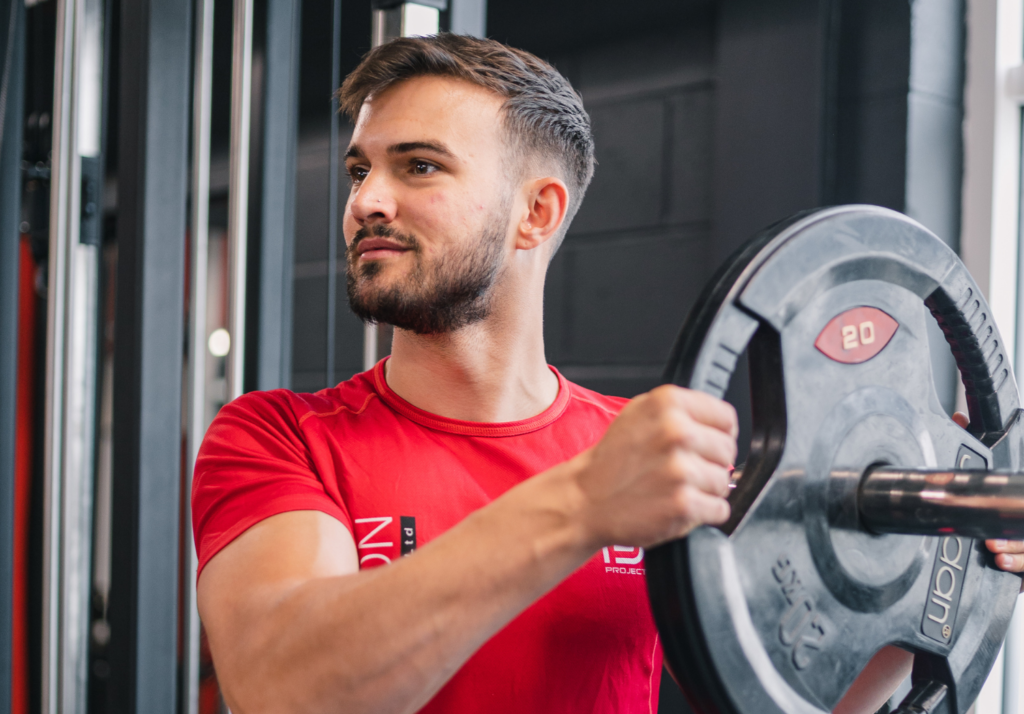
Long-term muscle growth requires three fundamental principles: consistency in training over weeks, months, and years; progressive overload to continually challenge muscles beyond their current capacity; and adequate nutrition — particularly sufficient protein and overall calorie intake — to fuel the repair and growth process. Without all three working together, results stall.
Key Takeaways
- Muscle hypertrophy occurs through two main types: myofibrillar (strength and speed) and sarcoplasmic (energy storage and endurance)
- Consistency is the most important factor — sporadic training stalls progress regardless of programme quality
- Progressive overload means gradually increasing weight, reps, sets, or exercise variation to prevent plateaus
- Adequate protein intake (1.6 to 2.2 grams per kilogram of bodyweight daily) provides the building blocks for muscle repair
- A programme that fits your lifestyle is easier to follow consistently than an extreme plan you abandon after two weeks
If you want to know how to build muscle or in other words increase your muscle hypertrophy, then this article will be of interest to you. To build muscle through a well-structured weightlifting program, it is necessary to lift with good form, to fully overload the target muscle groups and with ‘the right’ weight, intensity and time under tension. You probably know all of that, but why are these things important?
In basic terms, when you overload your muscles with resistance training consistently over time, you are pushing your muscle cells and fibres to create microscopic tears within the overloaded muscle tissue which leads to your body’s repair response. The muscle growth happens during the recovery period as your body repairs itself.
The two main muscular hypertrophy types are:
– Myofibrillar – for strength and speed.
– Sarcoplasmic – for energy storage and endurance.
A good strength and conditioning programme will incorporate training that works both hypertrophy systems to give a strong foundation to lift a heavier squat or deadlift PB, build endurance for an upcoming running or cycling event, or strengthen your joints to eliminate knee pain.
Follow these 3 tips to build muscle:
- Be consistent!
We cannot stress the importance of this one enough. Whatever your health and fitness goals, whether losing fat, getting fit for an event or building muscle, changing your body composition doesn’t happen overnight, the best results come from your compounding effort over time, so you need to give your training the time and patience it deserves.
Training once or twice a week but then having a week or two off when life gets in the way is going to stall your progress and keep you from hitting your goals. If you want long term results, you’ve got to continuously hit the same muscles over and over again – for weeks, months and years.
That’s why it’s so important for whatever fitness and nutrition plan you’re following to fit into your existing lifestyle, so you can be consistent with it when things get busy.
But don’t worry, with a progressive plan you won’t get bored with your workouts…
- Keep your body guessing with progressive overload
As your body gets stronger and adapts to the training, your programme should change to ensure you keep getting results.
Once you have adapted to your program you will be ready to gradually increase the weights, repetitions, sets and add some exercise variations into your sessions to progressively overload your muscles and keep that all-important damage and repair cycle working hard to continually grow your body stronger.
It might be tempting to stick with the same weights once you feel them moving a bit easier, but you’ll be plateauing your progress if you do!
- Nutrition: Make sure you put the good stuff in to get the good stuff out!
We know this is probably the most boring and by far the most difficult part for most people, but if you’re trying to build muscle, focusing on your nutrition is an absolute must.
Getting enough protein is absolutely essential for muscle growth and changing of body composition. Protein is the key building block for body tissue and is a major component in muscle cells. It’s also the most thermic macronutrient with 25-30% of calories consumed from protein being used for digestion and metabolism and should be a key focal point of your plan if you’re looking to gain muscle.
Try to include around 30g of protein in each meal every three to four hours to keep help repair and maintain muscle tissue and keep you energised throughout the day.
For more information on how to build muscle, read our beginner’s guide.
Understanding the Muscle Repair Cycle
When you perform resistance training, the mechanical tension placed on muscle fibres creates microscopic damage at the cellular level. This process, known as exercise-induced muscle damage (EIMD), triggers an inflammatory response that signals the body to repair and reinforce the affected tissue. The repaired fibres are slightly thicker and stronger than before — this is the fundamental mechanism of muscle hypertrophy.
This repair process primarily occurs during rest and sleep, which is why recovery is not a luxury but a non-negotiable component of any muscle-building programme. The NHS recommends seven to nine hours of sleep per night, and research shows that growth hormone — a key driver of tissue repair — is predominantly released during deep sleep stages. Training without adequate recovery simply accumulates damage without the corresponding adaptation.
How to Apply Progressive Overload Safely
Progressive overload does not mean adding weight to the bar every session. Sustainable progression uses multiple variables: increasing repetitions at the same weight, adding an extra set, improving exercise tempo, or introducing more challenging exercise variations. The key principle, according to the ACSM, is that training demands must gradually increase over time to continue driving adaptation.
A practical approach is to work within a repetition range (for example, eight to twelve reps) and only increase weight once you can consistently complete the upper end of that range with good form across all sets. This method ensures that technique quality is never sacrificed for heavier loads — an important safeguard against injury, particularly for those training without supervision.
Nutrition Timing and Muscle Protein Synthesis
While total daily protein intake matters most, research suggests that distributing protein across four to five meals throughout the day may optimise muscle protein synthesis (MPS). Each meal should contain approximately 20 to 40 grams of protein to maximise the MPS response. The British Journal of Sports Medicine found that this distributed feeding pattern is more effective for muscle growth than consuming the same total protein in fewer, larger meals.
Carbohydrates also play an important role by replenishing muscle glycogen stores depleted during training and supporting the energy demands of intense sessions. A balanced approach — adequate protein for repair, sufficient carbohydrates for energy, and healthy fats for hormonal function — provides the nutritional foundation that allows progressive overload to translate into actual muscle growth.
Frequently Asked Questions
How long does it take to build noticeable muscle?
Most beginners can expect to see measurable changes in muscle size and strength within eight to twelve weeks of consistent resistance training. The rate of muscle gain varies based on genetics, training experience, nutrition, and programme design. The ACSM notes that beginners can gain approximately 1 to 1.5 percent of bodyweight in lean mass per month under optimal conditions.
How many times a week should I train to build muscle?
Three to four resistance training sessions per week is optimal for most people. Research published in the British Journal of Sports Medicine found that training each muscle group at least twice per week produces superior hypertrophy results compared to once per week. Rest days between sessions targeting the same muscle groups allow for adequate recovery and growth.
What is progressive overload and why does it matter?
Progressive overload is the gradual increase of training demands over time — through heavier weights, more repetitions, additional sets, or increased training complexity. It is the foundational principle of muscle adaptation according to the ACSM. Without progressive overload, the body has no reason to adapt and muscle growth plateaus.
How much protein do I need to build muscle?
The British Journal of Sports Medicine recommends 1.6 to 2.2 grams of protein per kilogram of bodyweight daily for individuals engaged in resistance training. Distributing protein intake across four to five meals throughout the day optimises muscle protein synthesis rates.
Do I need supplements to build muscle?
Supplements are not required for muscle growth. A well-balanced diet providing adequate protein, carbohydrates, and fats covers the nutritional needs of most people. Creatine monohydrate is the most research-supported supplement for strength and muscle gains, but whole foods should always form the foundation of your nutrition plan.
What is the difference between myofibrillar and sarcoplasmic hypertrophy?
Myofibrillar hypertrophy involves growth of the contractile muscle fibres themselves, contributing to increased strength and power. Sarcoplasmic hypertrophy involves an increase in the fluid and energy stores within muscle cells, contributing to endurance and muscle volume. A well-designed programme trains both systems for balanced development.
How important is sleep for muscle growth?
Sleep is essential. The NHS recommends seven to nine hours per night for adults. During deep sleep, the body releases growth hormone, which plays a key role in muscle repair and growth. Chronic sleep deprivation has been shown to impair muscle recovery, reduce strength, and increase the risk of injury.
Sources & References
- ACSM — Progression Models in Resistance Training for Healthy Adults — Position stand outlining progressive overload principles and training recommendations for muscle strength and hypertrophy.
- British Journal of Sports Medicine — Protein Intake and Resistance Training — Systematic review recommending 1.6 to 2.2 grams of protein per kilogram of bodyweight daily for individuals performing resistance training.
- NHS — Sleep and Recovery Guidelines — Recommends seven to nine hours of sleep per night for adults, highlighting the role of growth hormone release during deep sleep for tissue repair.
- British Journal of Sports Medicine — Training Frequency for Hypertrophy (Schoenfeld et al.) — Meta-analysis finding that training each muscle group at least twice per week produces superior hypertrophy results compared to once-weekly training.